we do it
The company’s approach is built on strong values, a robust ethical culture and a governance model that places people at the heart of every decision. At Sanitas, integrity, transparency and accountability guide the corporate strategy and reinforce fairness and respect in the care provided and in relationships with all stakeholders. Oversight, traceability and accountability drive a more efficient and innovative management model capable of generating sustainable value.
Since joining the Bupa Group in 1989, Sanitas has been part of an international healthcare organization with operations across numerous markets on five continents. This global reach is supported by an organizational model structured around three major business units with independent management capabilities — Bupa Global & UK, Asia Pacific, and Europe & Latin America — as well as operations in India and Saudi Arabia.
International presence
Within this framework, Sanitas is part of the Europe and Latin America division, which includes countries such as Poland, Turkey, Chile, Brazil, Mexico and Peru. This platform also coordinates the commercial activities of Bupa Global Latin America in Guatemala, Panama, the Dominican Republic and Ecuador.
This reflects a leadership model that combines shared strategic direction with the adaptation of priorities and plans to the realities of each market, with the aim of maintaining common standards of excellence and commitment on a global scale.
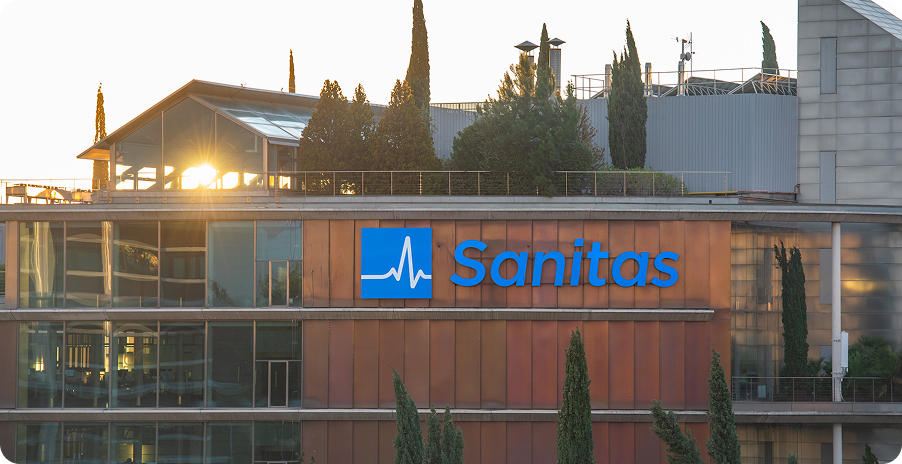
The map below illustrates the international footprint of the Bupa Group and its presence in strategic markets. Within this framework, Sanitas is part of the Europe and Latin America (ELA) division, operating within an organizational model that combines a global vision, regional coordination, and a tailored approach to the specific needs of each market.
revenue
(+14% vs. 2024)
operating profit
(+9% vs. 2024)
insured members
(+7% vs. 2024)
patients
(+6% vs. 2024)
At Sanitas, corporate governance operates as a management and control system that integrates risk management with a long-term value creation perspective. This framework makes it possible to anticipate and mitigate relevant risks, ensure consistent decision-making, and protect stakeholder trust, enabling the company to act with integrity, transparency, and responsibility at all times.
Corporate governance in Spain
At Sanitas Seguros, corporate governance is built around a Board of Directors composed of highly experienced professionals whose expertise provides strong leadership and strategic direction for the company. All Board members perform their duties in accordance with the principles of honesty and integrity. To carry out its responsibilities effectively, the Board is supported by specialized committees that provide expert oversight, strengthen governance, and enable more agile and effective decision-making.
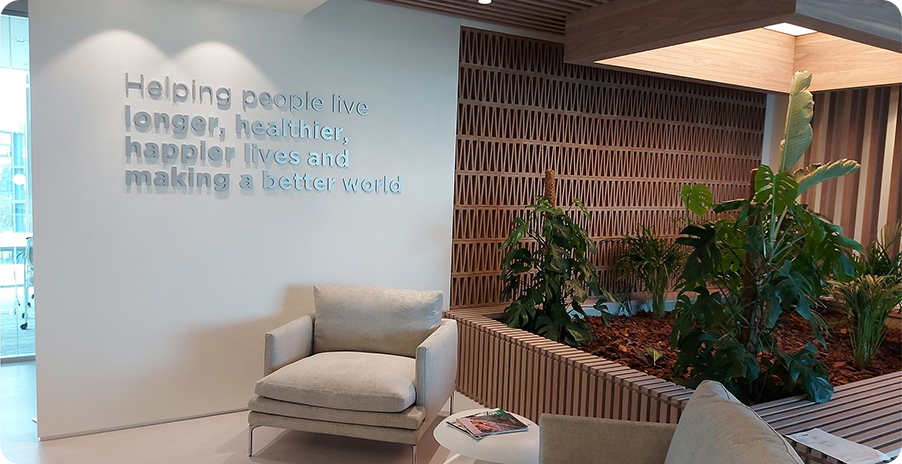
Sanitas combines ethical leadership and a robust governance model with healthcare delivery distinguished by excellence in customer care and innovation. This combination reinforces its distinctive position and underpins its standing as a global benchmark in healthcare and patient experience.



















An independent advisory committee with extensive experience and a mandate to provide strategic advice and guidance supports Bupa Europe and Latin America. The committee is made up of the following members:
Sanitas’ governance framework establishes clear rules for decision-making, accountability, and performance oversight. This ensures alignment with the company’s values, regulatory compliance, and effective risk management.
In supplier management, this framework is reflected in transparent supplier selection and qualification criteria, clear expectations for ethical conduct and compliance, and ongoing performance monitoring to ensure quality, safety, and person-centred care.
Strong and responsible governance
At Sanitas, the supply chain is an integral part of the company’s commitment to integrity and responsible business practices. Accordingly, Sanitas expects its suppliers to demonstrate a clear commitment to transparency and respect for human and labour rights as a prerequisite for building trusted relationships and ensuring consistent performance across its operations.
Almost all of Sanitas’ suppliers are based in Spain (97%), accounting for virtually all transaction volume (97%).
This policy establishes the requirement for Sanitas to maintain a third-party risk management framework that includes procedures for the selection, management and oversight of suppliers. Its purpose is to support the smooth day-to-day operation of the business, help ensure that systems function effectively, and underpin the delivery of services to customers.
GRI 2-8
This policy sets out the strategy that Sanitas is implementing to fulfil its ambition of becoming the world’s most customer-centric healthcare company. Clinical governance at Sanitas is the systematic approach to implementing, maintaining and continuously improving the quality and safety of the services it provides and commissions.
Sanitas’ ethical commitment is reflected in a robust procurement process that governs the selection, contracting and management of suppliers through a risk-based segmentation procedure. This includes risks relating to sustainability, modern slavery, financial crime, security and privacy, customers, reputation and regulatory compliance.
Sanitas maintains a monitoring model that enables the identification of key risks and strengthens compliance throughout the commercial relationship.
Risk control, oversight and management
Oversight includes specific controls in critical areas to protect service continuity and maintain stakeholder confidence:
- Fraud indicator updates
- Financial solvency reviews
- Risk-based segmentation process
- Due diligence process
- Contracting process
Under this process, the suitability and materiality of suppliers identified as critical are assessed, including environmental, social and governance aspects.
Due diligence
- Environmental aspects
Environmental management systems, decarbonisation commitments and the integration of environmental criteria throughout the value chain.
- Social aspects
Labour rights, equal opportunities, the integration of social criteria throughout the value chain, and the integration of the United Nations Global Compact principles.
- Governance aspects
Implementation of a Code of Conduct and a whistleblowing channel, transparency, economic crime prevention frameworks, risk management systems, and value chain assessment processes.
To ensure the robustness of its management system, Sanitas relies on internationally recognised certifications that reinforce consistent practices in quality, environmental management and information security.
Certifications and standards
These certifications strengthen internal controls and enhance process reliability. The standards applied include:
- ISO 9001 – Quality management
- ISO 13485 – Quality management for medical devices
- ISO 14001 – Environmental management
- ISO 27001 – Information security management
Wherever possible, Sanitas also gives priority to purchasing from Special Employment Centres.
Strategic partners contribute directly to reducing the environmental impact of operations.
Suppliers as a driver of sustainability
In this context, during 2025 Sanitas implemented a Sustainable Procurement Guide to promote initiatives that improve efficiency and embed more sustainable practices in day-to-day operations, including:
- Promoting the use of renewable energy
- Reducing the consumption of single-use items and plastics
- Using 100% recyclable products
- Reducing paper consumption and, where paper is required, using 100% recycled paper
- Prioritising rail travel over air travel
- Using energy-efficient technology equipment that is both recycled and recyclable
- Improving accessibility for people with disabilities
- Recruiting workers through social inclusion initiatives
This body is responsible for reviewing and approving the company’s strategic priorities and corporate policies, while overseeing the long-term sustainability of the business model. It is composed of seven directors and chaired by a non-executive Chair.
Sanitas Seguros and its board of directors
The members of the Board of Directors are as follows:
-
Manuel Pizarro: Non-Executive Chair and External Director
-
Cristina de Parias: Independent Director
-
Carlos Jaureguizar: Chief Executive Officer (CEO) and Executive Director
-
Mónica Paramés García-Astigarraga: External Director
-
Pilar Villaescusa: Executive Director
-
Javier Ibáñez: Executive Director
The Board of Directors defines the executive responsibilities of the Chief Executive Officer and delegates oversight responsibilities to the Audit Committee, the Risk Committee and the Criminal Compliance Body. Within this framework, it ensures that policies are clear and proportionate to prevent conflicts of interest and strengthen independence in decision-making.

The following bodies form the core leadership, management and corporate governance structure of the company.
Organisational structure: committees and governance bodies
Executive committee
The Executive Committee is responsible for the executive leadership of the company, overseeing day-to-day management and acting as its official representative. It is supported by the General Management of Sanitas and the strategic business areas responsible for delivering the company’s business plan.
Audit committee
The Audit Committee oversees the quality and reliability of financial and regulatory reporting. It also supervises the internal control system, risk management and the relationship with the external auditor.
Criminal compliance body
The Criminal Compliance Body strengthens the company’s crime prevention framework and compliance culture. It also ensures compliance with Article 31 of the Spanish Criminal Code and oversees the controls associated with the criminal liability of legal entities.
Risk committee
The Risk Committee coordinates the identification, assessment and management of key risks and provides the Board of Directors with regular reporting on risk management, compliance and internal control. Its key deliverables include the Annual Complaints Report, the Own Risk and Solvency Assessment (ORSA) Report and the Solvency and Financial Condition Report (SFCR).
The Risk Committee is supported by three subcommittees:
-
Clinical Governance committee: Oversees patient safety policies and the management of clinical risks across Sanitas hospitals.
-
Conduct committee: Promotes ethical conduct and helps prevent risks related to business conduct and operational integrity.
-
Security, Privacy and Artificial Intelligence committee: Ensures the protection of information and privacy through regulatory compliance and effective risk management.
The Sanitas Code of Conduct sets out the principles of integrity, responsibility and transparency that guide the conduct of everyone across the organisation.
Code of conduct
More than a formal set of rules, the Code serves as a practical reference for fostering a shared ethical culture, supporting consistent decision-making, and ensuring that day-to-day behaviours across all functions and levels of the organisation remain aligned with the company’s values.
The Sanitas Code of Conduct applies to both employees and suppliers and sets out the principles and standards that underpin the organisation’s culture. Its key elements include:
Transparency and integrity in management
Compliance with the Code supports consistent, principled decision-making, promotes transparency, and reinforces integrity in day-to-day management and across the company’s key processes.
Supporting policies that put the Code into practice
To embed these commitments, Sanitas complements the Code of Conduct with a range of specific policies, including the Crime Prevention Framework Policy, the Conflicts of Interest Policy, the People Policy, and the Fraud and Other Financial Crimes Prevention Policy. Together, these strengthen the company’s governance framework and support effective risk management.
Speak Up reporting channel
The company provides a confidential and anonymous reporting channel, Speak Up, which is managed by an independent third-party provider and enables employees and other stakeholders to report potential breaches of the Code.
Regular review and continuous improvement
The Code is reviewed periodically to ensure it remains up to date and aligned with changes in the operating environment, evolving societal expectations, and the organisation’s own needs.

At Sanitas, risk management is based on five principles that determine how risks are identified, prioritised and managed across the organisation, under the direction of the Board of Directors.
Risk management at Sanitas
The risk management model is maintained through a continuous cycle of monitoring and improvement, with clearly defined responsibilities and layered oversight. Accountability begins with the Board of Directors and extends throughout the executive and control structure, involving the Chief Executive Officer, the Management Committee, the Risk Committee, the Audit Committee and the Criminal Compliance Body.
This structure ensures consistency in implementation, strengthens traceability and supports rigorous compliance with established procedures.
Systematic identification and assessment of current and emerging risks, and of their potential impact on the organisation.
Establishment of a risk appetite and risk tolerance framework, with clear limits to guide operations and decision-making.
Implementation of preventive and corrective responses and mitigation measures to reduce exposure and strengthen operational resilience.
Use of high-quality information and data to support decision-making, prioritise actions and measure the effectiveness of controls.
Internal conditions that make the model operational and ensure its effective implementation:
- Clearly defined responsibilities and strong accountability.
- A culture of prudence and responsible risk management.
- Prompt communication of incidents and alerts, supported by coordinated and timely responses.
Sanitas has a structured risk management and control framework designed to protect the organisation across all areas of its operations.
Three lines of defence for risk management
This framework is based on the Three Lines of Defence model, with clearly defined and complementary responsibilities that strengthen risk prevention, oversight and continuous improvement.
-
First line: identifies, owns and manages risks within each business unit.
-
Second line: oversees the internal control framework and ensures the effective implementation of policies.
-
Third line: provides independent assurance on the overall effectiveness of the risk management framework.
To support its effectiveness, the model is underpinned by continuous training and digital tools that strengthen teams’ capabilities, particularly within the first line of defence.
The Risk, Compliance, Actuarial and Internal Audit functions form the core pillars of this protection and governance framework.